Clouding and haze
Cloudy glass is almost never dirty glass.
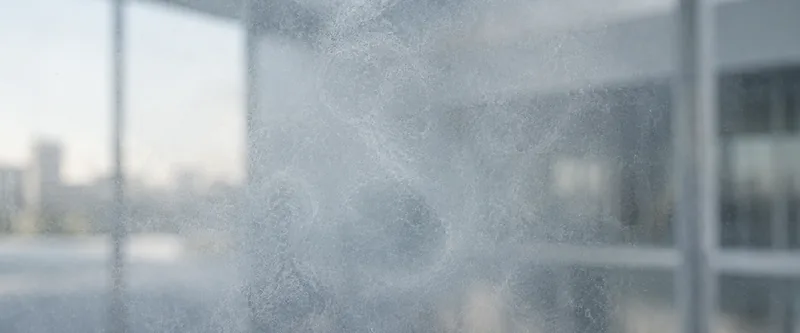
Veil, halo and loss of transparency across the whole pane. It isn’t stuck on top: it is the surface.
What causes it
- Standing water. Water that sits on the panel and never dries attacks the surface. At first you can’t see it; later it is haze.
- Stacked panels. Glass stored or shipped with moisture between the sheets comes out of the crate already hazed.
- Site chemicals. Strong detergents and removers left to dry on the glass.
- Weathering. Years of water and sun on the same piece.
The first two matter for a practical reason: the panel arrived like that. It wasn’t damaged in use, and arguing over who caused it gives nobody their transparency back.
Why replacing costs more than the quote says ›
Haze or staining?
Wash the glass properly, then look at it dry and against the light. If it comes off and leaves no shadow, it was a deposit. If what stays is an even veil across the whole pane, it is the surface, and this is the page. If what stays are spots or shaped run-off marks, it is the other one.
What we do
We don’t grind. Polishing means grinding, and grinding leaves a lens that shows from the street. Combined chemical and physical action: the panel gets its transparency back and keeps its original properties. It is done in place, without taking the panel out.
Why almost nobody polishes it ›
How we check it wasn’t ground down ›
What we don’t treat
- Broken or cracked glass — that one does need replacing.
- Coated glass and textured glass.
Saying so up front beats a promise we can’t keep.
Price and timing
Both come down to the condition of the piece and where it is. We don’t post a number we can’t hold to: send us a photo and we’ll answer both, and whether it can be brought back or the panel has to be replaced.